Hardware innovation at software speed for Physical AI
Physical AI needs custom, low-latency edge silicon tuned to specific sensor and actuation workloads. ACI lowers the technical and financial barriers, taking designs from idea to working FPGA implementation — so developers can focus on their application, from 5G to autonomous systems to industrial IoT, without FPGA’s steep learning curve.



System architects, bring-up engineers, software engineers — and more
Abu Dhabi, United Arab Emirates
Bridge the gap from RTL to a running system.

Bridging the Physical AI Gap
Physical AI collapses the gap between sensing and acting, putting a brutal set of demands on the silicon underneath. The chip must run custom logic tuned to a specific workload, deliver low-latency inference fast enough to close a real-time control loop, and do it inside an ultra-low-power envelope. Meeting all of that at once demands workload-specific architecture and deep silicon expertise — which is exactly what makes purpose-built edge silicon so hard to create, and so valuable once it exists.
“Physical AI requires silicon that can evolve with changing application needs, and Altera FPGAs provide the flexibility of a reconfigurable architecture. Cognichip’s novel approach with AI-native design highlights the potential to help developers bring physical AI concepts to Altera’s programmable platforms more efficiently.”
— The team from Altera
From Idea to Bits
Cognichip ACI takes you straight from a whiteboard to a complete, working FPGA design. This is “software speed” made literal: the design loop that used to take teams of specialists quarters now runs in a fraction of the time, because ACI does the workload-specific architecture and the FPGA implementation for you.
Glass-to-Glass
16 ms
photon → photon
Camera in, display out
Frame Rate
120 fps
sustained 4K
No dropped frames
Frame Jitter
±0.3 ms
steady cadence
Certifiable, no stutter
Power Envelope
12 W
fanless · vs 300 W
Battery & thermal ready

The path from idea to running FPGA

Design Ideation
To match your team’s skill level — start from a block diagram, a whiteboard drawing, or design by conversation with ACI to get your idea off the ground.
Engineering Specs
ACI will derive, analyze, enrich, and finalize your engineering specs, keeping you informed and ensuring no contradictions or uncertainties.
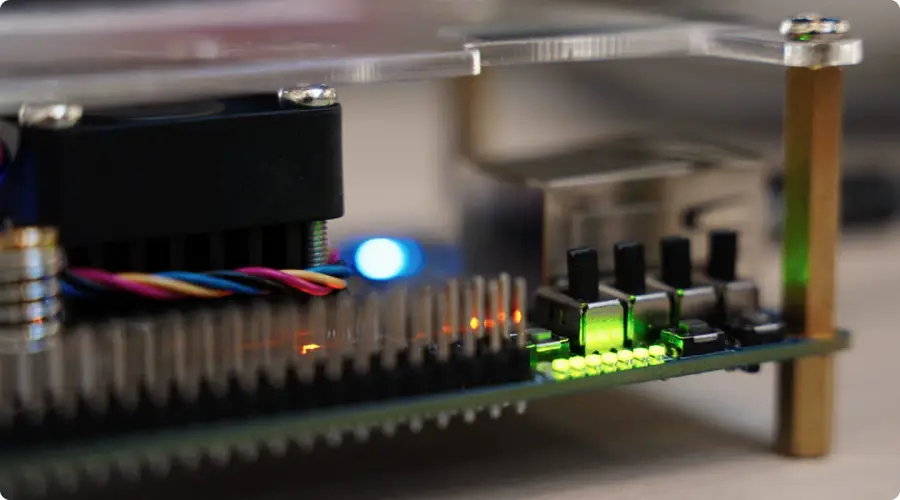
Detailed Implementation
Ready to go? Ask ACI to start building your design with your target FPGA in mind. Create FPGA target-optimized RTL and integrate IPs into your system.

Verification
ACI leverages the full gamut of capabilities built into its physics-informed core. It will formally verify requirements, build testbenches, and fix any corner cases.
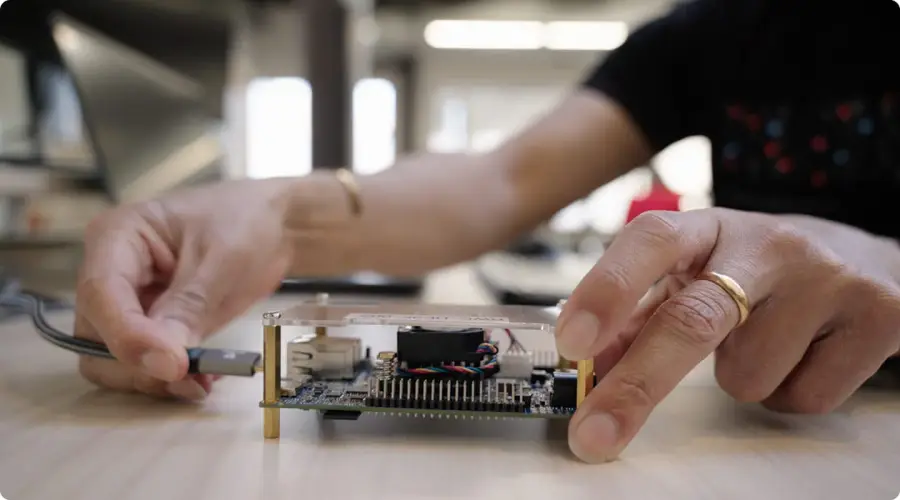
FPGA Bitstreams
Once the design is converged, ACI will drive available tooling to get bitstreams generated and even perform optimizations for optimal fit and speed.
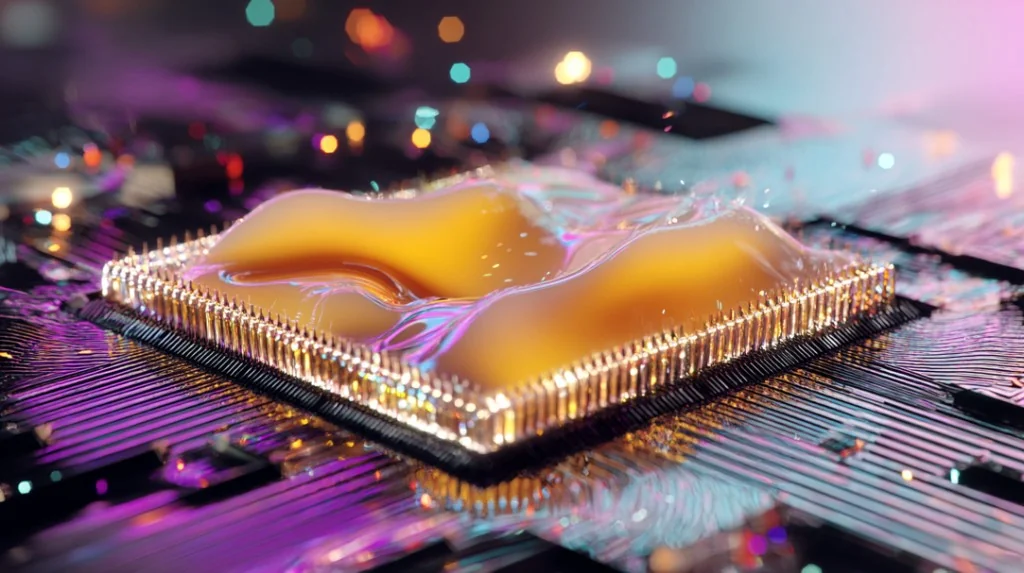
In-Silicon Testing & Bring-up
Use ACI to configure your FPGA and bring up your application. Generate and run sanity tests and test workloads, insert signal taps, experience and iterate.
From a whiteboard sketch to running silicon
Hassan hands ACI a glass-to-glass idea; it matches an FPGA board, finalizes the spec, generates and closes the design, and brings up live vehicle detection on real hardware — then drops in new models on request.

Capabilities in detail
End-to-End FPGA Prototyping
Generate complete FPGA prototyping workflows from your RTL design. ACI handles partitioning for multi-FPGA systems, constraint generation, and clock domain management.
- Automatic design partitioning for multi-FPGA configurations
- Clock domain crossing management
- I/O pin assignment and constraint generation
- Bitstream generation and programming
Artificial Chip Intelligence ACI™ collapses months of engineering iteration into hours through its physics-informed foundation model, delivering optimized designs that meet power, performance, and area targets on the first pass.
Accelerate your path to hardware
Get from RTL to a running system in days, not months.
Backed by $93M from Seligman, SBI, Mayfield, Lux Capital, and Candou Ventures